There Are Two Types of Corrections

There are two major types of corrections:

1. A normal pullback within a bull market – this is a garden-variety 5-8% pullback above a rising 200-day moving average. Momentum stocks with the highest relative strength during the correction are likely to significantly outperform during a recovery.

2. Deeper 15% to 20% correction in a major index – this one characterizes with periods of massive forced liquidation when people and institutions sell not because they want to, but because they have to. These type of corrections often start below a flat or declining 200-day moving averages of a major index. Some of these corrections turn into bear markets, which last more than a year. The best performers during a recovery are usually the ones that were hit the hardest during the correction – the ones that are down >80% from their 52-week highs, the ones that were essentially priced for a bankruptcy, but managed to survive.

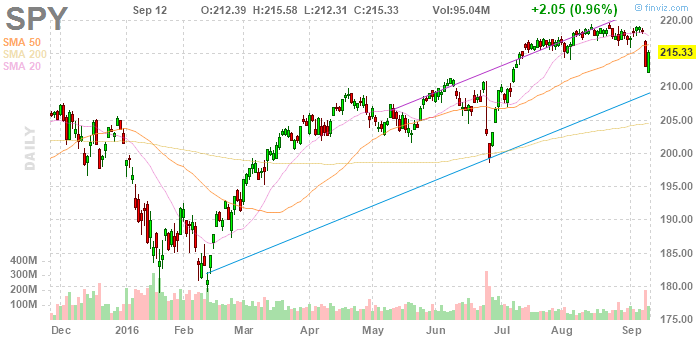
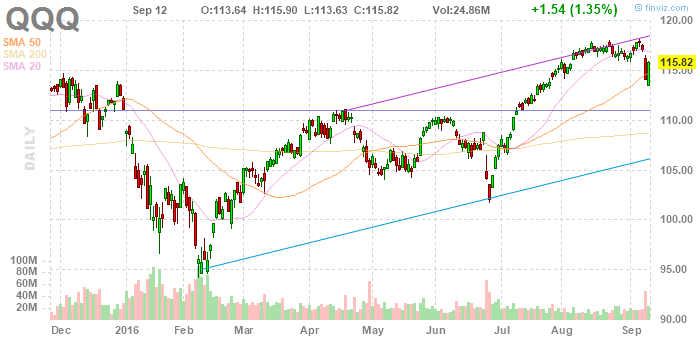
Based on the current price action, I believe we are in the first kind of correction. Act accordingly.
3 Scenarios for the Stock Market

The selloff last Friday brought back some volatility into the market. So far today, we are seeing a pretty strong bounce, but not impressive enough to change the overall technical picture. There are three main scenarios for the stock market in the next few weeks, listed in terms of probability:

1. SPY and QQQ enter into a wide, choppy range. Breakouts won’t work as well in this environment compared to the last 2-3 months. Mean-reversion trades will have an improved likelihood of success.

2. After a brief consolidation below their 50-day moving average, SPY and QQQ continue lower and test 210 and 110 respectively. Short-term volatility futures could go in backwardation under this scenario.

3. Quick V-shaped recovery to new all-time highs. This seems the least likely, but it is good to have an open mind and more importantly, keep a watchlist with stocks that have held well during this minor pullback. Those stocks are the new leaders.

chart-1

chart-2

Jesse Livermore on Why You Don’t Have to be Active Every Day in the Stock Market

First, do not be invested in the market all the time. There are many times when I have been completely in cash, especially when I was unsure of the direction of the market and waiting for a confirmation of the next move….Second, it is the change in the major trend that hurts most speculators.

Always remember; you can win a horse race, but you can’t beat the races. You can win on a stock, but you cannot beat Wall Street all the time. Nobody can.

There is the plain fool, who does the wrong thing at all times everywhere, but there is also the Wall Street fool, who thinks he must trade all the time. No man can have adequate reasons for buying or selling stocks daily– or sufficient knowledge to make his play an intelligent play.

Remember this: When you are doing nothing, those speculators who feel they must trade day in and day out, are laying the foundation for your next venture. You will reap benefits from their mistakes.