The Nasdaq Composite Is Within 4% Of Its Dotcom Highs. Now What

compq

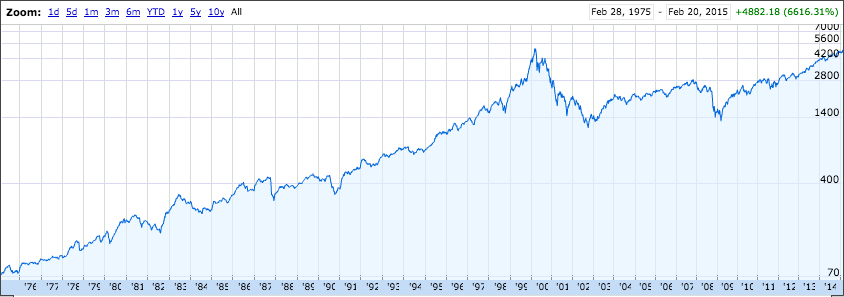
The S & P 500 (large caps), the S & P Midcap 400 and Russell 2000 (small caps) closed at new all-time highs. People thought that the Nasdaq Composite will never go back to its dotcom bubbly highs, but here we sit in 2015 and the Qs are just 4% below their 2000 level. The difference this time is that they have the earnings to back it up. The story of the Nasdaq Composite is an extreme, but typical example of how momentum often works. Between 1975 and early 2000, the Nasdaq Composite went up 6500%. Then it had an 80% correction. In the late 90s, people thought that the Internet was going to change everything we do, which was reflected in the market. Those people were absolutely right, but very few of the Internet companies that went public in the late 90s managed to remain solvent before they figure out how to make money. Those that survived, thrived for the most part.
www.tradingview

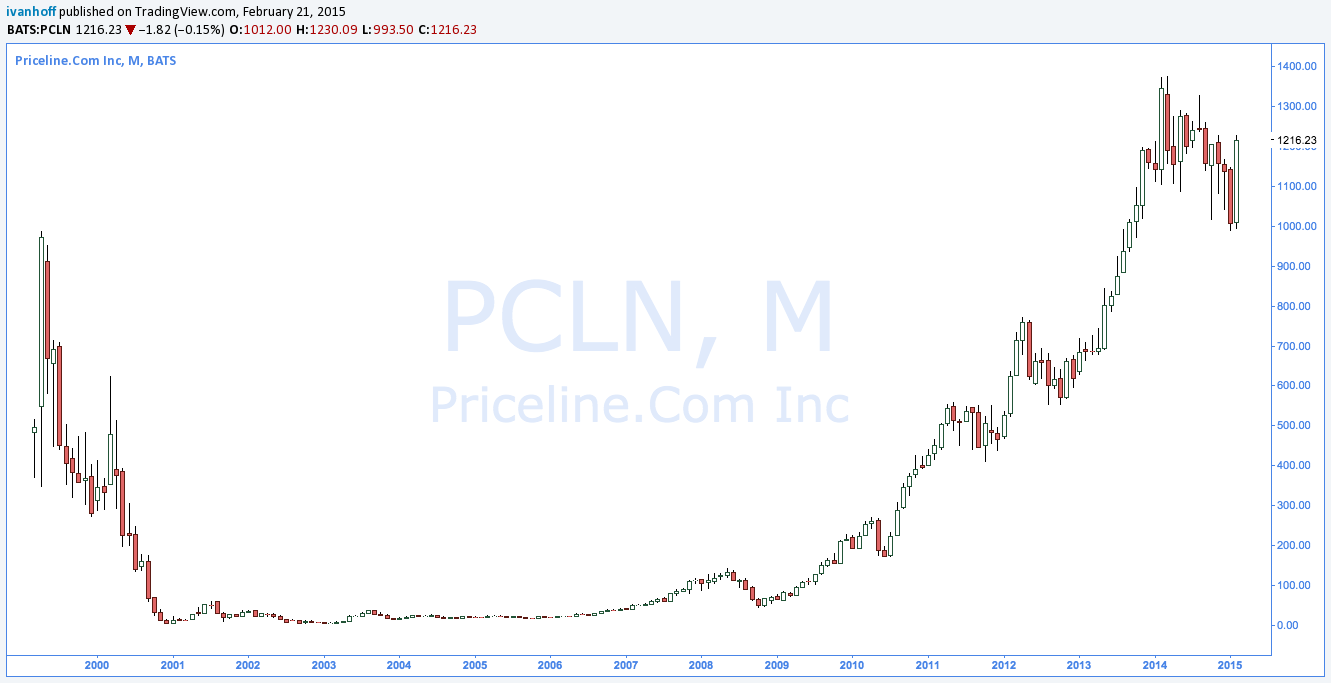
Take a look at the chart of Priceline. They IPO-ed on March 30th, 1999, raising 115 million dollars. Priceline sold its first shares to the public at split-adjusted $96 (in reality, it was 16, but later they have a 6 for 1 reverse split). Exactly one month after its IPO, Priceline was trading at split-adjusted 980. We are talking about 900% move in a month. For a brief moment, Priceline’s founder Jay Walker’s initial 25 million investment in the company was worth 5.8 Billion. Then the correction came. By early 2003, Priceline was trading at split-adjusted $6 per share. 12 years later, $PCLN is trading above 1200.

Check out my latest book and premium service.
Do You Really Want To Own The Best Performing Stocks Of Every Year?

Earlier this week, I posted on Stocktwits that boring businesses could have incredibly successful stock stories. I gave an example of Costco ($COST), which is up 2000% in the past 20 years. One of the comments on my tweet was – “So buy & hold could be a winning strategy?”. My reply at the time – sure, if u pick the right stocks and don’t mind 50% to 80% drawdowns along the way.

Now, it is a good time to elaborate on my answer. Yes, buy and hold could be very lucrative, but only if you hold your winners and have an exit strategy. All stocks are price-cyclical. All trends eventually end. Yes, there are stocks like $COST, which keep bouncing and hitting all-time highs, but the majority of today’s big winners won’t recover from their deep pullbacks.

Buy and hold forever rarely works. The market graveyard is full of trends that last only a few quarters.

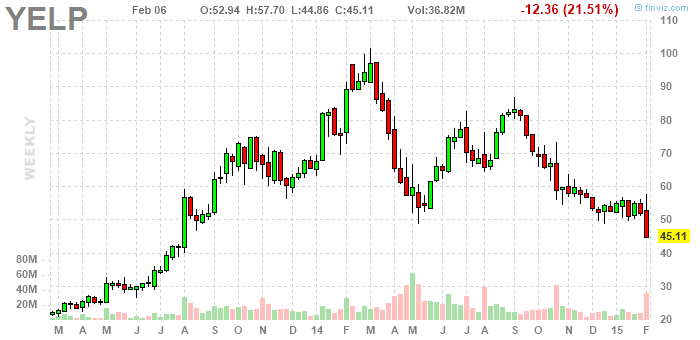
$YELP went from 20 to 100 in 2013; then it declined 50%. They just hit new 52wk lows last week.
chart

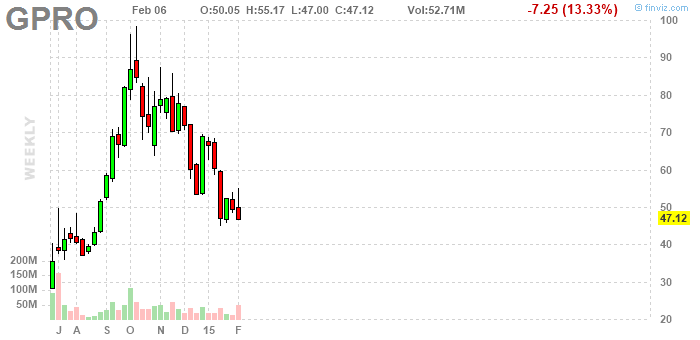
$GPRO went from 30 to 100 in about 3 months last year. It is down 50% from its highs.
chart-2

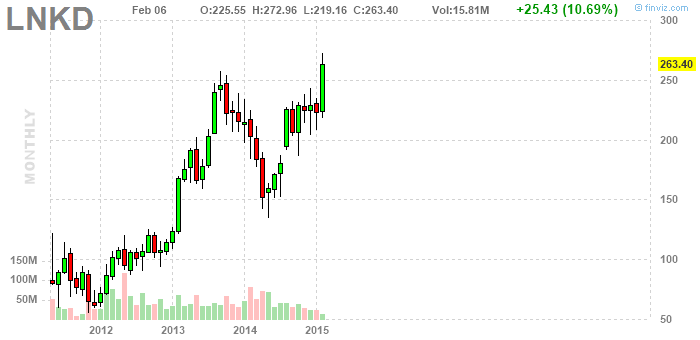
$LNKD reached new all-time highs yesterday. It is up about 200% since its opening print in 2011, but it had a 40% pullback along the way. Not an easy stock to hold.
chart-1

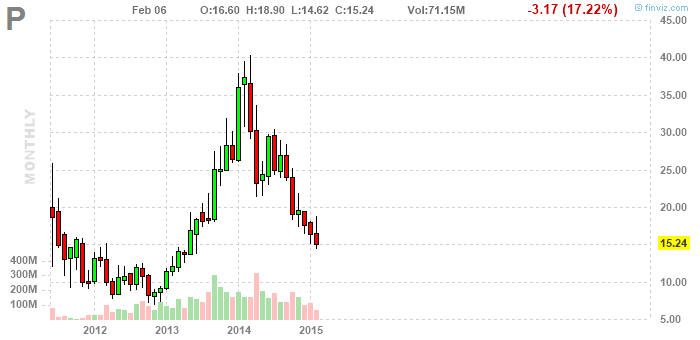
$P went from 10 to 37 in 2013 – early 2014. Today, it is trading around $15.
chart-3

The biggest winners tend to be very volatile and they are not for the faint of heart. It is typical for story/momentum stocks to go up several hundred % in a short period of time and then give back >50% of their move.

Not every hot stock today will turn into a long-term winner. Most will turn out to be short-term fads. With some basic risk management skills, you could still make a lot of money in them. We don’t know how long a trend will last, but we know when it starts and when it is over for the time frame we operate in. This is all we need to know.

Check out my latest book and premium service.
Here’s Why the Next 10 Years Will Be A Stock Picker’s Market

In late 1999, Warren Buffet told the world that the next 10 years will be tough for the stock market. And he was absolutely right. The S & P 500 actually lost 30% in that period.

Jesse Felder has an intriguing post on the subject. He says that some of the current market valuations are even higher than they were in the late 90s. Does that mean that we are in for another rough decade? Maybe. It depends on your market approach.

The period between 2000 and 2010 brought a lot of turbulence for the stock market. We had two “once in a 100-year storms” – the big correction in early 2000, when the Nasdaq Composite had an 80% drawdown and 2008/2009, when the S&P 500 had a 57% plunge. The very same decade also brought us epic bull markets in commodities and emerging markets, monstrous trends in consumer discretionary and technology names like Apple, Google, Monster Energy, Chipotle, Blackberry, etc. These are just a few of the huge multi-year moves that happened during the so called ‘lost decade”. There were countless more 50%-100% moves during each year. There were even more 25%-30% moves within each quarter and even more 10-15% moves within each month.

Even if the next 10 years turn out to be just as volatile and crazy as the first decade of this century; even if the major equity indexes deliver negative returns for the decade and we go through several humongous corrections, there will be plenty of opportunities for shrewd traders and investors to consistently grow wealth. Some things never change in the market. One of these things is the existence of great growth and recovery stories. Financial markets are amazing opportunity machines.

You should always think for yourself and take every opinion with a grain of salt. In this case, it is obvious that I am biased. My financial research business and my personal market approach are based on the deeply ingrained belief that markets are inefficient and could be beaten with proper equity selection and risk management. I am not telling you to stop dollar-cost averaging in indexes and learn how to pick stocks. I am just sharing what has worked for me and where I will continue to focus my efforts.

Check out my latest book and premium service.