Weekly Review – May 23 – Choppy Market of Stocks

Tops are not formed by a lack of buying. Tops are formed by heavy selling. The number of new 52-week highs has been declining for the past month and a half. We are yet to see a significant spike in new 52-week lows.

sc

sc-1

The stock market continues to provide mixed signals. SPY is making lower highs and yet sectors like energy, basic materials, and financials are consolidating constructively above their 50-day moving averages.

2

The market has been correcting through sector rotation.The first sectors to break down in late April – large cap tech, semiconductors, biotech, are starting to show relative strength, especially the semis, which are considered a leading indicator.

1

There are not enough technical reasons to be overly bullish. There are not enough reasons to be overly bearish. There are plenty of reasons to be nimble, trade less and use smaller position sizes. The stock market continues to frequently change directions and fool the majority of overly active market participants.

Interestingly, the number of bearish money managers continues to rise, while the number of bullish managers is declining. This has often been a contrarian indicator as today’s capital has become overly short-term. I think the bears had their chance last week to push the market lower and create a panic, and they missed it. From my biased perspective, the bulls have a psychological advantage next week. I see more long than short setups. It is a different question if those setups are going to work. We saw multiple failed breakdowns and breakouts in the past couple of weeks. I was shaken out of a few positions only to see them come back.

sc-2

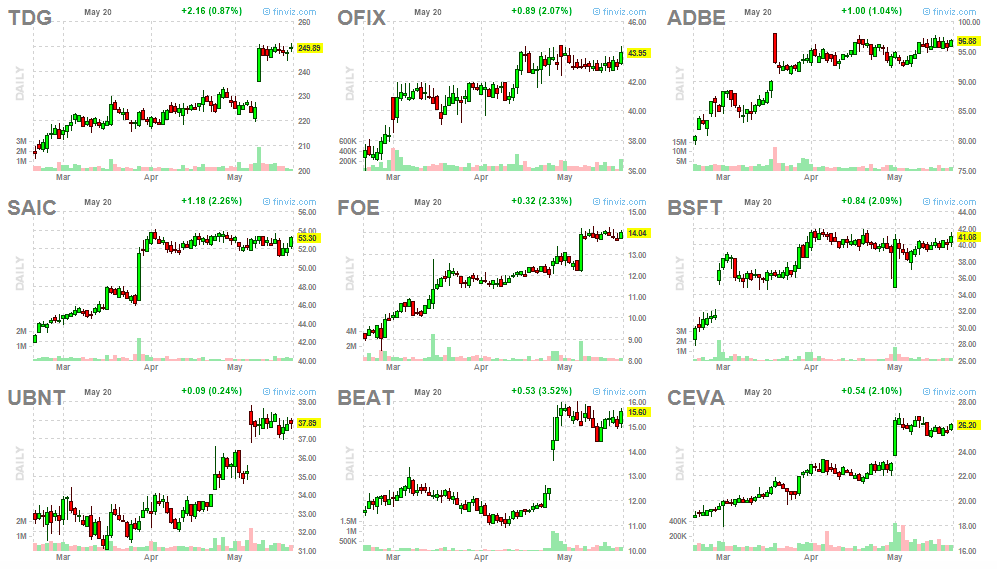
A few SL50 stocks that are setting up for potential breakouts:
1

Here’s a link to my latest free weekly email. Consider signing up for it here. It is short, sweet and actionable. It consists of one swing trade idea and one insightful market wisdom.

If you are not a subscriber to Market Wisdom already, we offer a 14-day free trial.

What to Do if You are Down A Lot on a Position

Traders protect capital by taking small losses. Investors protect capital by having a well-diversified portfolio or buying short-term puts on their large individual stock holdings when market conditions start to deteriorate.

By far, the most frequently asked question I get asked privately via email is some variation of “I am down 30% on such and such stock and I can’t take it anymore. Tell me what to do – take a big loss or hold?”.

I understand the precarious state of the situation. I’ve been there several times in my career. In this case, there’s no point of telling people that they should always use a stop; hope is not a strategy, always have an exit strategy; if you don’t know why you are in a  stock, you won’t know where to exit.

What I usually tell people is that the loss has already happened. Since it is in an individual stock, there are no guarantees that it can’t go lower or that it will ever recover to their break-even point. Now, it is up to them if it will remain just a loss or become a habit-changing lesson.

There is a difference between a drawdown in an individual stock and a drawdown in a well-diversified index. The latter is usually actively rebalanced every year and it tends to recover over time – some do faster than others.

The questions you need to ask yourself are:

1. How much money are you really comfortable losing on this one position? It doesn’t make sense to risk more than 1% of your capital per idea.

2. Would you buy at the current levels again? What is your stop if you do?

3. Why do you need to make money exactly in that name. There are thousand of liquid stocks out there. The odds are that at least several of them offer better risk/reward entry points at the time and have a better potential of making you money.

After a brief philosophical answer, I cut straight to the chase.

Your first loss is your best loss. Staying with a large loser has a detrimental impact on your health and well-being. You get obsessed with this one position and as a result, you miss on so many other good opportunities that the market generously provides every week.

What would I do in your situation? I’d take a the large loss and move on. Then I’d take a few days to recharge emotionally, review past trades, study winners and losers, talk to other traders that have been there.

Trading should be an enjoyable and profitable experience; otherwise, why bother?


2 Ways to Become a Better Trader

Trading should be an enjoyable and consistently profitable process. Here are two simple things you could do to become happier active market participant:

A. Personal awareness.
B. Situational awareness.

Personal awareness is about knowing your strengths and your weaknesses. Are you a detailed oriented or a big picture type of person?

It is not a good idea for big picture analytical guys to try to trade frequently. They overtrade, lose money and as a result, their confidence erodes and they miss out on future opportunities. It makes a lot more sense for them to focus on longer-term trend following, position trading and some forms of swing trading.

It is incredibly hard for a detailed-oriented person to make long-term investments. They tend to overthink, look at things from too many perspectives and at the end cannot make a decision. They tend to react to each small change and, as a result, they get frequently stopped out of perfectly good positions. It makes more sense for them to focus on intra-day technical trading or some forms of swing trading.

Why is it so important to know who you are and to develop a trading or investing style that fits your personality and cognitive strength?

Because you need a lot of practice to achieve mastery in any market approach. You are much more likely to practice harder if you enjoy what you do. The more you like what you do, the more you practice. The more you practice, the better you get. The better you get at something, the more you enjoy doing it.

The most practical way to figure out what type of market approach is best for you is to try different approaches.

People like to repeat that there are no shortcuts in life. In reality, there are shortcuts. Finding the right mentor or support group could accelerate your learning curve tremendously and get you on the right track to success.

A good mentor could teach you how to work smart and help you find the right market approach for your personality, strength, and lifestyle.

Belonging to a passionate community of aspiring traders will help you to become more perseverant and learn faster. You know the saying – you are the average of the five people you spend the most time with. If you spend more time communicating and reading smart people who work diligently and persevere through all challenges, you are likely to become more like them.

Situational awareness is about knowing what type of setups are likely to work best in the current market environment. Is it time to trade breakouts in high-momentum stocks or time to trade mean-reversion setups of stocks showing negative momentum divergence? Is it time to buy tight-range stocks in anticipation of breaking out or time to mostly sit on the sidelines and protect capital? Is it time to short weakness or is it time to buy weakness? Is it time to buy gold miners or big data stocks? Is the market choppy or trending? Which industries are trending up and which down? Are the indexes near overbought or oversold levels? All active traders need to have a daily or at least weekly process that helps them to figure out the type of market environment and the setups and industries that are currently working.

Related to the topic above:

How Active Traders Time the Market

Why the Path is as Important as the Move

How to Become a More Confident Trader