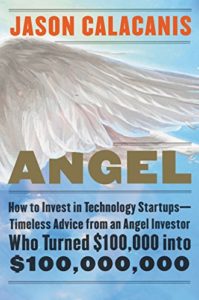
 This book is brutally honest and a must read for wanna-be angel investors and founders. Jason might sound a little condescending at times, but he is sharing valuable insights earned the hard way.
Here are ten of my favourite insights from the book:
- What angel investing and the lottery have in common.
I buy lottery tickets for a living, but unlike the normal schmucks on the street, I get to buy tickets that are in the top 1 percent of the winning pool.
2. The people that dare to take more risks intelligently are typically luckier in life.
If you learn anything from this book, it’s that you must take risks as an angel investor and in life if you want at least the chance of an outsized outcome.
You can make your own luck in this life by putting yourself next to the people who are already winning.
3. The business of angels
If these businesses didn’t look completely crazy, then everyone would want to invest in them and there would be no need for angels. In fact, the term “angel” is used because we are the investors who come to a founder’s rescue in their hour of need— when nobody else believes in them.
The best angels in the world have four qualities, giving them the ability to (1) write a check (money), (2) jam out with the founders over important issues (time), (3) provide meaningful customer and investor introductions (network), and (4) give actionable advice that saves the founders time and money— or keeps them from making mistakes (expertise).
Your job as an angel investor is to block out the haters, doubters, and small thinkers, because if you think small you’ll be small. I’d rather see my founders fail at a big goal than succeed at a small one.
Remember there are a hundred reasons why these things fail, so you’re not going to have a hard time saying no, and there are typically only one or two reasons to say yes.
Founders always share investor meeting details with each other and your reputation is everything in our industry. If you are helpful, present, and considerate, then you’re going to get a great reputation. If you are unprofessional, cavalier, or conceited, or use your position of power in any way that isn’t in service of the founder, then you’re toast.
4. The best deals are not available to just anyone.
The best deals are typically not on platforms like AngelList or at incubators like Y Combinator or 500 Startups. The best deals never see the light of day. They’re quickly filled by insiders who are sharing deal flow, and by elite founders with killer startups tapping their existing network.
5. On the best investment, you can make.
I passed on investing in Twitter because I was, at the time, a founder of companies. I stupidly thought that the best investment I could make was in my own company.
It was at that point I realized that I didn’t need to know if the idea would be successful. I only needed to know if the person would be. It was clear as day to me that whatever Ev worked on would be successful, but my own ego and my need to be right and understand everything got in the way of me hitting my first big home run.
6. There’s no difference between the founder and their company
As you go through your angel investing life, take some time to evaluate the person and their motivations. Ask yourself a simple question: “Would I buy stock in this person if I could?” If you wouldn’t buy stock in a founder, you shouldn’t buy stock in their company— because there is no difference between the founder and their company; they are one and the same.
7. Why are you doing this?
If folks are building a startup for money, they will eventually quit when they realize there are many better ways to make money faster and with more certainty. If you want to make a lot of money, you’re better off being a world-class programmer on a very esoteric and in-demand vertical and getting Google or Facebook to give you $ 1 million-plus a year in stock and cash for ten years in a row. You have no downside, you can work a couple of hours a day, and you get unlimited free food.
8. Why startups fail
The number one reason a startup shuts down is not actually running out of money, which is what most people believe. The number one reason a startup fails is that the founder gives up.
9. On communication between founders and angels
“If a startup isn’t sending you monthly investor updates, it’s going out of business.”
The more concise and professional the updates, the greater the chances that angels will be able to help you, including investing more money and introducing you to their friends as a responsible founder who’s a delight to work with. Angels want to feel needed, and founders who don’t make their angels feel needed have lost their most likely source of follow-on funding— their current investors.
10. The market is constantly changing
What worked when I started investing, when there were one-tenth as many startups being formed every year, doesn’t work today. It was wise to invest in great teams, pre-product back then, where today you almost universally want to wait for the founders to finish their product and get to market before investing.
Source: Calacanis, Jason (2017-07-18). Angel: How to Invest in Technology Startups—Timeless Advice from an Angel Investor Who Turned $100,000 into $100,000,000. HarperCollins. Kindle Edition.
—
Further reading: Fred Wilson on What It Takes To Be A Great Angel Investor