The FED induced zero interest rate environment is affecting our lives in more ways than you can probably imagine. One of the most affected industries is insurance:
The fundamental business of insurance is to collect premiums, invest them for a period of time, and then pay out a portion of the money in claims, while earning a small profit margin along the way. Yet when interest rates are so low, insurance companies are forced to collect more in premiums to fund future benefits (since they can’t bridge the gap with investment growth), and in some cases the prospective return on premiums is so low there isn’t even room left for the company to retain a margin for both risk and profits; the end result is that insurers are changing or eliminating many lines of insurance.
As noted previously in this blog, the low interest rate environment has already helped to drive a number of long-term care insurance companies out of the marketplace entirely, and all of the remaining companies now charge dramatically more to offer what coverage they do. Estimates from the AALTCI suggest that every 1% decline in interest rates has driven up the cost of long-term care insurance premiums by 10%-15% over the past decade. Various policy options have been curtailed as well; it is likely that by the end of the year, lifetime benefits and limited-pay policies will no longer be available at all.
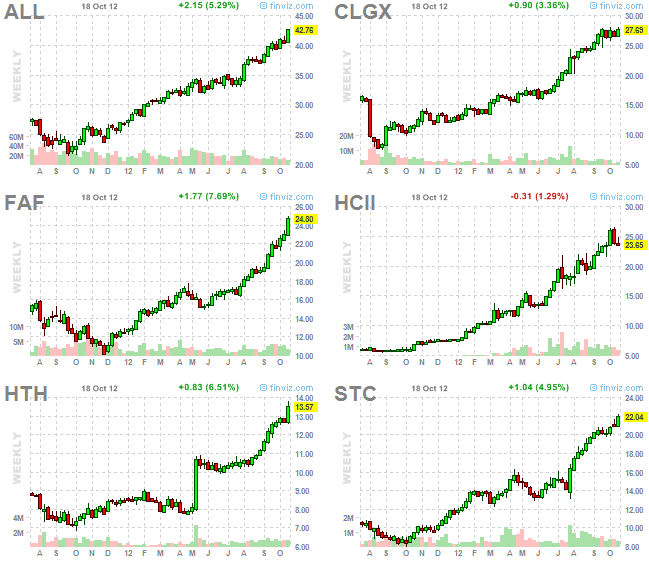
Higher premium will boost insurance companies’ short-term earnings substantially. The market realized that 6-9 months ago, when many of the insurance stocks started to break out to new 52 week highs from good technical bases. Rising expectations for U.S. housing market recovery have also been a factor in this re-pricing process.
You could sit and complain about the increase of your insurance rate or you could pay attention to the 52-week high list to figure out where else the market thinks there will be changes in the economy. There is one basic law in business – one company’s rising costs are another company’s rising revenue and more often than not, the market does a very good job of identifying which the winners and the losers are, long before they become mainstream news.
This is not to say that the market is flawless forecasting indicator. It is not and there are times when it is very wrong and driven by animal instincts, but it is one of the best discounting mechanisms we have.


